The Health Benefits and Properties of Phosphorus Mineral to the Body
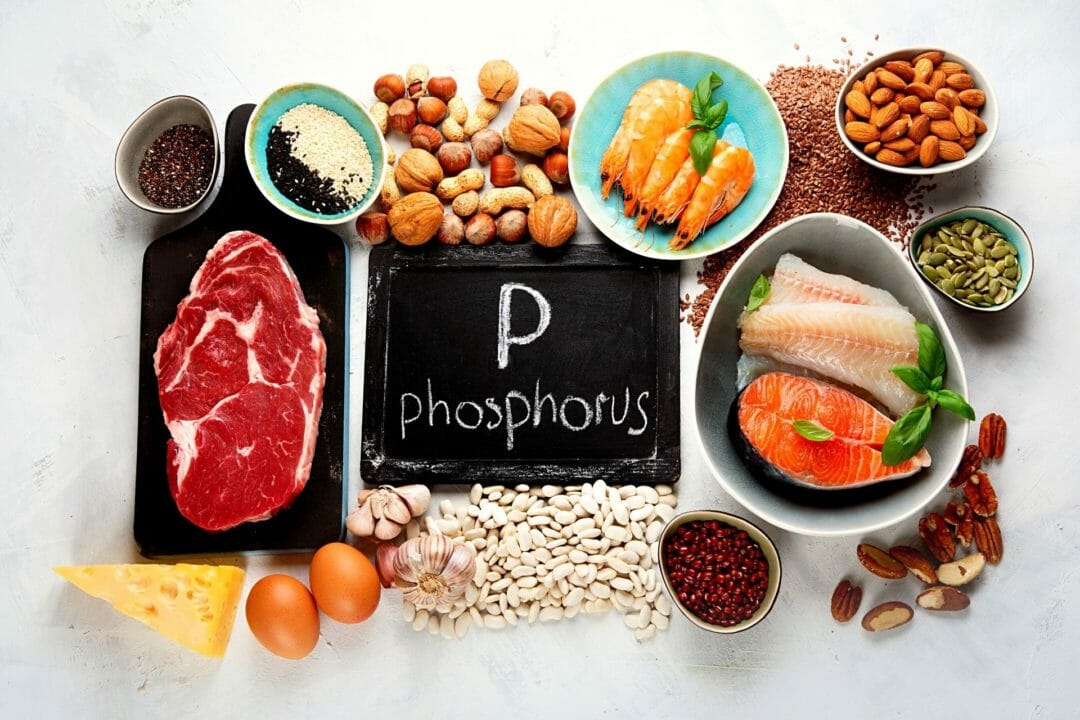
Phosphorus is a chemical element with the symbol P and atomic number 15. It is an essential mineral found in many foods and is crucial for various bodily functions. Here are some key points about phosphorus:
- Forms: Phosphorus exists in several forms, including white, red, violet, and black phosphorus.
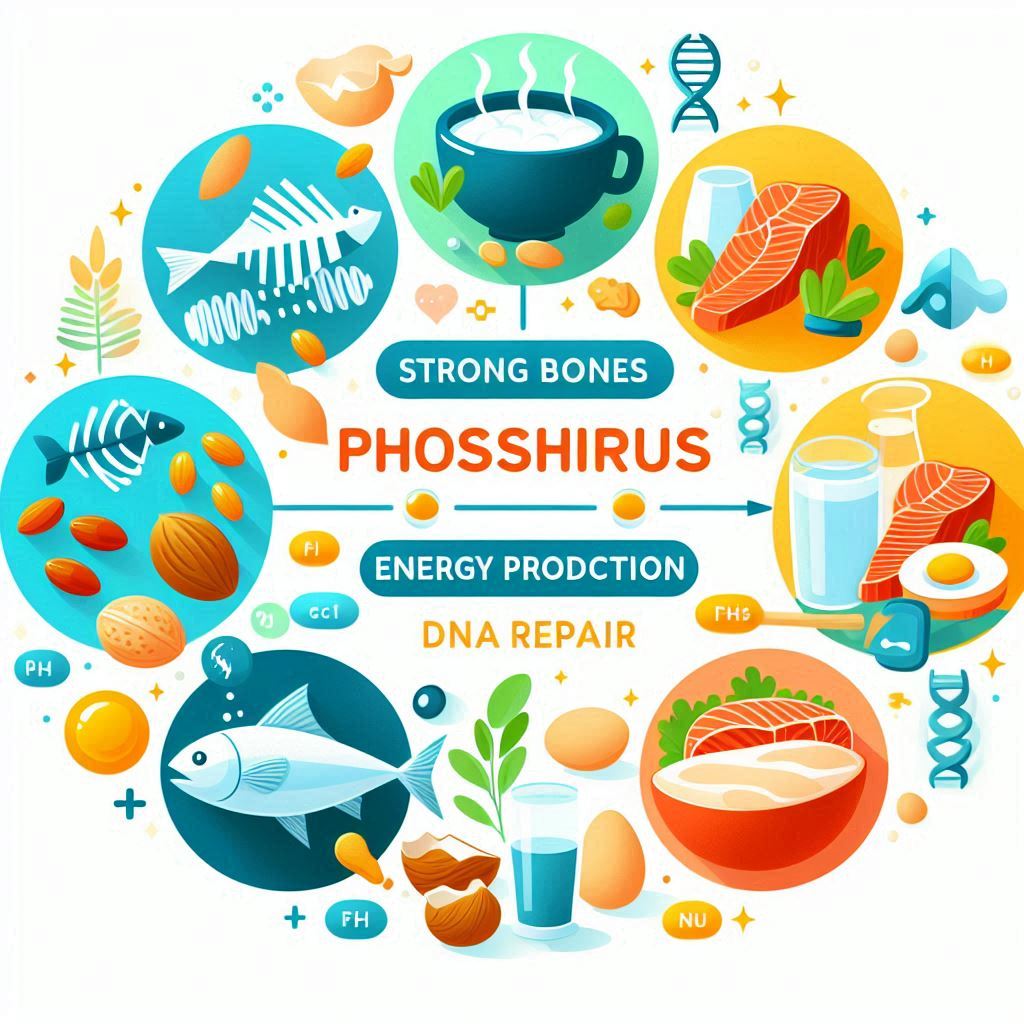
- Biological Role: It is a vital component of bones, teeth, DNA, RNA, and cell membranes. It also plays a key role in energy production as part of adenosine triphosphate (ATP).
- Dietary Sources: Phosphorus is high in foods such as meat, fish, dairy products, nuts, seeds, and whole grains.
- Functions: It helps in the formation of bones and teeth, energy storage and usage, muscle function, and the maintenance of acid-base balance in the body
Health Benefits of Phosphorus
Phosphorus is an essential mineral that plays several crucial roles in the body. Here are some of its key health benefits:
- Bone and Teeth Health: Phosphorus, along with calcium, is vital for the formation and maintenance of strong bones and teeth.
- Energy Production: It is a component of adenosine triphosphate (ATP), which is necessary for energy production in cells.
- Cell and Tissue Repair: Phosphorus helps in the growth, maintenance, and repair of tissues and cells.
- Kidney Function: It aids in filtering waste and toxins from the kidneys.
- Muscle Function: Phosphorus is important for muscle contractions and recovery after exercise.
- Nerve Conduction: It supports the proper functioning of nerves throughout the body.
- DNA and RNA Production: Phosphorus is essential for the production of DNA and RNA, the body’s genetic building blocks.
Phosphorus is found in many foods, including meat, fish, dairy products, nuts, seeds, and whole grains
What are the Chemical Composition of Phosphorus
- Atomic Structure: Phosphorus has 15 protons and typically 15 electrons. Its electron configuration is [Ne] 3s² 3p³.
- Allotropes: Phosphorus exists in several forms, including:
- White Phosphorus: Consists of P₄ tetrahedra and is highly reactive.
- Red Phosphorus: More stable and less reactive than white phosphorus.
- Black Phosphorus: Has a layered structure similar to graphite and is the least reactive form.
- Oxidation States: Phosphorus can exhibit multiple oxidation states, including -3, +3, and +5.
- Compounds: Phosphorus forms various compounds, such as phosphates (PO₄³⁻), phosphoric acid (H₃PO₄), and phosphides (compounds with metals).
Phosphorus is essential for life, playing a critical role in biological molecules like DNA, RNA, and ATP, which are vital for energy transfer in cells
Sources of Edible Phosphorus
Phosphorus is found in a wide variety of foods, making it relatively easy to meet your daily requirements through a balanced diet. Here are some excellent sources of edible phosphorus:
- Dairy Products: Milk, cheese, and yoghurt are rich in phosphorus.
- Meat and Poultry: Chicken, turkey, pork, and beef are good sources.
- Seafood: Fish such as salmon, mackerel, and shellfish like scallops and cuttlefish.
- Nuts and Seeds: Pumpkin seeds, sunflower seeds, and hemp seeds are particularly high in phosphorus.
- Legumes: Lentils, chickpeas, and soybeans provide significant amounts.
- Whole Grains: Foods like wheat bran, oat bran, and whole wheat products.
- Vegetables: Potatoes and peas also contain phosphorus, though in smaller amounts compared to other sources
Safety and Side Effects of Phosphorus
Phosphorus is essential for many bodily functions, but it’s important to consume it in appropriate amounts to avoid potential side effects. Here are some key points regarding the safety and side effects of phosphorus:
Safety
- Recommended Intake: The recommended daily intake of phosphorus varies by age and health status. For adults, it is generally around 700 mg per day. However, the safe upper limit for most adults is 4,000 mg per day.
- Supplementation: Most people get enough phosphorus from their diet and do not need supplements. However, certain medical conditions may require phosphorus supplementation.
Side Effects
- Hyperphosphatemia: Excessive phosphorus intake can lead to hyperphosphatemia, a condition characterized by high levels of phosphorus in the blood. This can cause calcium to be pulled from the bones, leading to weakened bones and potentially dangerous calcium deposits in blood vessels, lungs, eyes, and heart.
- Kidney Health: People with kidney disease need to be particularly cautious about phosphorus intake, as their kidneys may not be able to filter out excess phosphorus effectively.
- Digestive Issues: High phosphorus levels can sometimes cause digestive issues, including diarrhea and stomach pain.
Special Considerations
- Medical Conditions: Individuals with conditions such as chronic kidney disease, hyperparathyroidism, or certain genetic disorders may need to monitor their phosphorus intake more closely.
- Medication Interactions: Some medications can affect phosphorus levels in the body. For example, glucocorticoids used to treat inflammatory conditions can increase phosphorus excretion.
Maintaining a balanced diet and following medical advice can help manage phosphorus levels effectively.