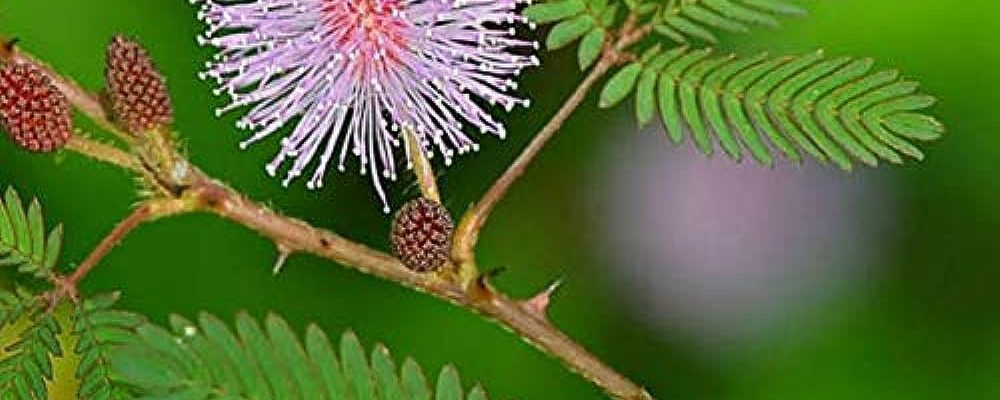
Mimosa Pudica
Mimosa is a common name for several plants that belong to different genera, such as Mimosa, Acacia, and Albizia. They are all members of the pea family (Fabaceae) and share some characteristics, such as having compound leaves and yellow or pink flowers.
Some mimosa plants are sensitive to touch and fold their leaves when touched or shaken. This is a defensive mechanism to protect themselves from herbivores or environmental stress. The most well-known example of this is Mimosa pudica, also called the sensitive plant, humble plant, or shame plant
Mimosa plants are native to tropical and subtropical regions of both hemispheres, but some have become invasive weeds in other areas. They can grow in poor soils and tolerate drought and heat. Some mimosa plants can also fix nitrogen in the soil, which helps them grow in nutrient-poor conditions
Mimosa Pudica Benefits
Mimosa Pudica has been used for medicine in Africa for centuries. The flowers of the plant and the leaves have been used in healing wounds. Traditionally the leaf extract showed it has a great ability to heal wounds and also aid in fastening the healing process of wounds.

1. Mimosa Pudica Wound Healing Activity:
Traditionally the leaf extract made by grinding the leaves with little water and extracting the juice is used for treating wounds. This remedy has been proven scientifically now! For the study, both the methanolic and water extracts were used in 3 different concentrations (0.5 %, 1 % and 2 %) in a basic ointment base. The ointment containing 2 % of both methanolic and water extract showed significant wound-healing activity.
2. Mimosa Pudica Anti Venom Activity:
An interesting study was done on the anti-venomous activity of mimosa pudica and that too cobra venom! The study which was done on the water extract of the mimosa pudica dried root (made by boiling the dried root in water) proved that it is very good at inhibiting the activity of the snake venom. But this remedy has to be done under the observation of an experienced healer or herbalist.
3. Anti Depressant, Anti Anxiety and Memory Enhancing Properties:
Traditionally, Touch Me Not Plant has been used for treating depression in certain countries. Along with treating depression, it also reduces anxiety and also improves memory, for the whole plant extract is used. A study on mice proved all these traditional uses to be true, you can read the study here.
4. Mimosa Pudica For Piles:
Mimosa Pudica is very good for treating bleeding piles and has been used as a remedy for many many years. For the remedy, crush the leaves into a fine paste and apply as a poultice, it will greatly ease the burning and bleeding. This is due to its amazing wound healing and anti-inflammatory properties.
5. Mimosa Pudica For Ulcers:
Another very important study on mimosa pudica was its effect on ulcers. The leaf extract reduced the volume of gastric acid secretion, total acidity and ulcer index compared to control. The study done on rats with artificially induced ulcers proved that 100 mg of ethanolic extract very effectively reduced the ulcers.
6. Mimosa Pudica For Diarrhea:
Mimosa pudica is very good for treating diarrhoea and has been used for it for years. For treating diarrhoea, the leaf extract is used. A study done on albino rats by inducing them to diarrhoea using castor oil and treating them with ethanolic extract from the leaves proved to be very effective in controlling the diarrhoea.
7. Mimosa Pudica Anti-Inflammatory Properties:
Another study proved its anti-inflammatory properties. The study done on rats with artificially induced paw oedema proved its anti-inflammatory properties. The results were very effective and significant. On village sides, we boil the leaves of mimosa pudica and use the warm liquid as a compress, happy to know that it has been proven scientifically.
8. Mimosa Pudica Anti Diabetic Activity:
Mimosa pudica’s anti-diabetic activity has been proven through research too. The research was done using the ethanolic extract but usually, the leaf powder or the root powder is taken daily to bring down the blood sugar levels. However, I would kindly suggest consulting an Ayurvedic physician for the correct dosage if you are planning on taking it to reduce blood sugar levels.
9. Liver Protecting & Anthelmintic Activity of Mimosa Pudica:
Another important medicinal use is the protection of the liver against toxins. When rats were given toxic ethanol along with mimosa pudica extract, it proved to be very effective in protecting the liver from toxicity. Mimosa pudica also has anthelmintic properties (expels worms) so when we consume the extract, it expels worms very effectively.
10. Anti Microbial, Anti Fungal & Anti Viral Properties Of Mimosa Pudica:
Mimosa pudica has been proven for its anti-microbial, anti-fungal and anti-viral properties. The research was done using different concentrations of the mimosa pudica ethanol extract on various fungi and bacteria and it proved to be very effective in controlling them.
11. Anti Mumps Activity:
Another interesting but not much known medicinal use of touch me not plant is the anti-mumps activity. Touch me not plant completely prevented mumps and this is due to its wonderful anti-viral properties. You can read the study that supports this claim here.
12. Anti Convulsant Properties:
Touch Me Not plant leaf extract also has anti-convulsant properties and it is used in traditional African medicine it. In a study done on mice, the leaf extract given at a dose of 1000 to 4000 mg per kg protected them from induced convulsants.
13. Hypolipidemic Properties:
Touch me not plant lowers lipid levels and this is due to the presence of flavonoids, alkaloids and glycosides in it. In a study touch me not plant leaf extract at a dose of 200 mg per kg proved to be very very effective in reducing lipids. Research is going on to extract the compound responsible for the hypolipidemic activity.
14. Uterine Prolapse:
Touch me not plant is used for treating uterine prolapse in Ayurveda. For treating it, 15 to 20 ml of the plant decoction is given 3 times a day. Along with it, the root paste is also applied externally as a poultice. This is a 40-day treatment that is best done under medical supervision.
15. Aphrodisiac Properties:
Touch me not plant root has been used traditionally as an aphrodisiac and this use also has been proven through research. A study done on mice proved that 500 mg of ethanol extract of touch me not plant proved to be very effective and there was no side effect like stomach ulcer consuming it at all.
How to Use Mimosa
There are different ways to use mimosa plants, you can use them for various purposes, such as:
- Growing it as an ornamental plant for its attractive foliage and flowers. Some mimosa plants are sensitive to touch and fold their leaves when touched or shaken, which can be fun to watch
- Providing food and shelter for wildlife, such as bees, butterflies, and birds. Some mimosa plants have nectar-rich flowers that attract pollinators, while others have seed pods that feed birds and small mammals
- Using it for medicinal or cultural uses, such as treating skin wounds and burns, making dye, or producing incense. Some mimosa plants have healing properties or contain psychoactive compounds that can induce altered states of consciousness
If you mean the mimosa cocktail, you can use it for various occasions, such as:
- Enjoying it as a refreshing drink for brunch, easy to make, and a brilliant addition to any special occasion. The classic mimosa recipe calls for a bottle of your favourite Champagne or sparkling wine, orange juice, and (optional) triple-sec
- Exploring different variations of the mimosa by using different fruits, juices, or liqueurs. For example, you can make a Bellini with peaches, a Poinsettia with cranberries, or a Pineapple Mimosa with pineapple vodka and honey syrup
- Garnishing your mimosa with your favourite fruits, berries, or herbs. You can also make a virgin mimosa with sparkling grape juice or cider instead of wine. Pour a splash of grenadine for sweetness and a “sunrise” effect
The Side effect of Mimosa plant
Mimosa plants have various medicinal uses, such as treating wounds, infections, dysentery, piles, diabetes, inflammation, ulcers, and fertility problems. They also have antioxidant, antibacterial, antifungal, antidiabetic, and antitumor properties
However, mimosa plants may also have some side effects if consumed in large amounts or by sensitive individuals. Some of the possible side effects are:
- Mimosa plants contain a toxic substance called mimosine, which can cause hair loss, stomach irritation, dullness, and loss of appetite in humans and animals. Mimosine can also interfere with thyroid function and iodine metabolism13
- Mimosa plants have anti-fertility activity, which means they can reduce the chances of conception or cause abortion in pregnant women. They can also affect the menstrual cycle and hormonal balance
- Mimosa plants may interact with some medications, such as blood thinners, anticoagulants, antidepressants, and anticonvulsants. They may also increase the effects of sedatives and alcohol. Therefore, it is advisable to consult a doctor before using mimosa plants if you are taking any of these drugs
Therefore, it is important to use mimosa plants with caution and moderation, and only under the guidance of a qualified practitioner. Mimosa plants may have beneficial effects for some conditions, but they may also have harmful effects for others. Always do your research and consult a professional before using any herbal remedy.
Watch the video below for more information