
Herbal Wellness and Safety: Understanding Regulations and Best Practices
1. The Cultural Roots of Herbal Wellness
Across Africa, Asia, and Latin America, herbal medicine is deeply woven into cultural traditions. In Nigeria, Ghana, and Uganda, indigenous healers use plants like Moringa oleifera, Aloe vera, and Zingiber officinale (ginger) for their healing properties. These practices reflect centuries of ethnobotanical knowledge — now being integrated into modern health systems through scientific validation.
2. Verified and Researched Herbal Plants
According to the World Health Organisation (WHO) monographs on selected medicinal plants, several herbs have verified safety and efficacy profiles:
| Plant Name | Traditional Use | Scientific Validation | Safety Notes |
|---|---|---|---|
| Aloe vera | Skin healing, digestive aid | Proven anti‑inflammatory and wound‑healing properties | Avoid excessive ingestion; may cause diarrhea |
| Moringa oleifera | Nutritional supplement, immune booster | Rich in antioxidants and essential amino acids | Safe when used moderately |
| Zingiber officinale (Ginger) | Anti‑nausea, anti‑inflammatory | Clinical trials confirm digestive and anti‑oxidative benefits | May interact with blood‑thinning drugs |
| Curcuma longa (Turmeric) | Anti‑inflammatory, liver support | Contains curcumin with strong antioxidant activity | High doses may cause stomach upset |
| Ocimum gratissimum (African basil) | Antimicrobial, respiratory relief | Studies show antibacterial and antifungal effects | Safe in culinary doses |
These plants are recognized by WHO and regional pharmacopoeias for their quality, safety, and efficacy, forming the backbone of responsible herbal wellness.
3. Regulatory Frameworks and Compliance
NAFDAC (Nigeria) mandates that all herbal medicines must be registered before sale or distribution. The process includes:
- Submission of product details and scientific documentation.
- Laboratory testing for purity, contaminants, and dosage accuracy.
- Labeling that includes botanical names, warnings, and expiry dates.
- Renewal every two to five years, with post‑market surveillance for safety.
A comparative study of African countries shows similar frameworks in Ghana, Uganda, and Zimbabwe, emphasizing pharmacovigilance and quality assurance for locally manufactured herbal products.
4. Best Practices for Herbal Safety
To ensure consumer protection and cultural respect:
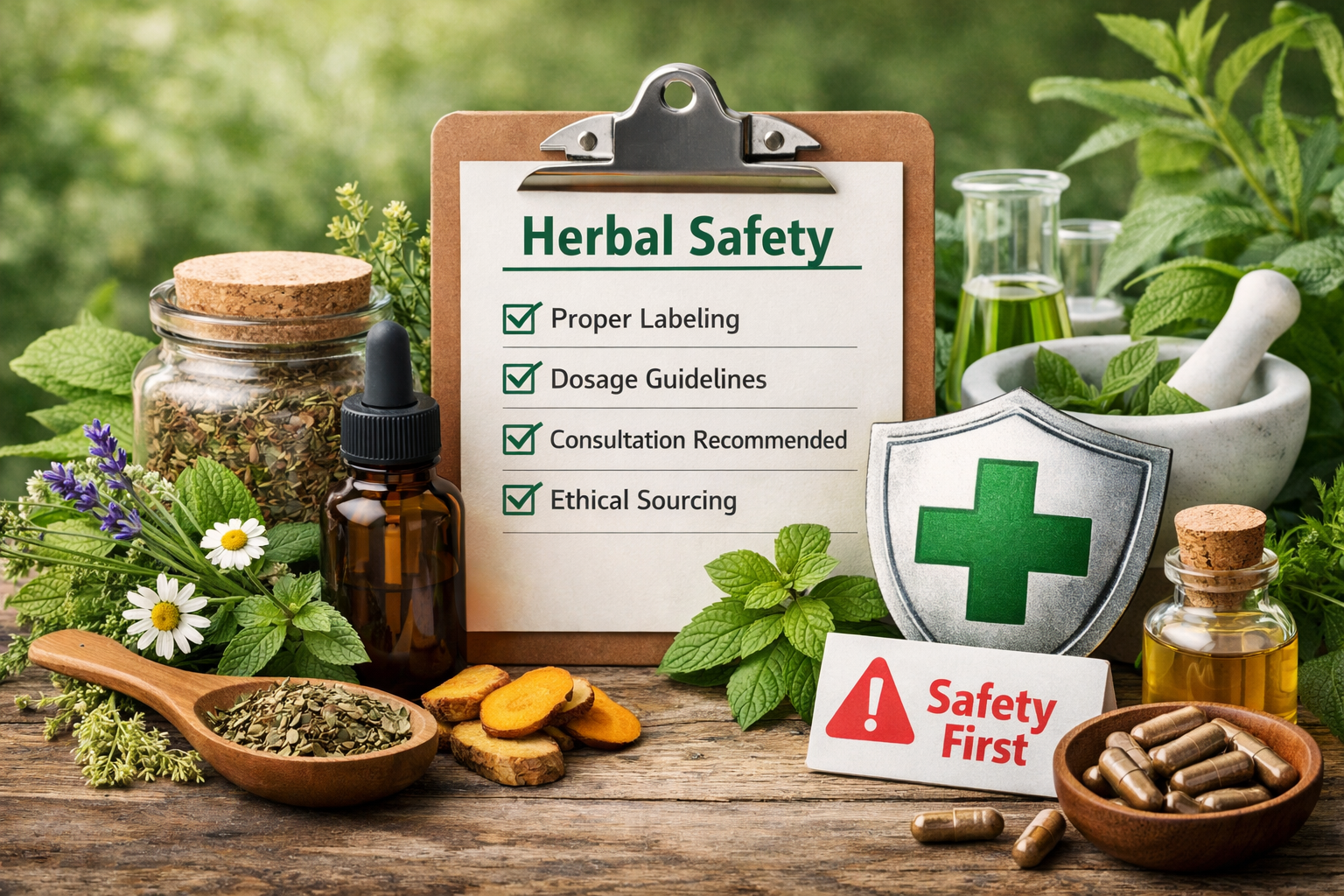
- Source ethically — use sustainable harvesting and fair‑trade suppliers.
- Label transparently — include dosage, contraindications, and certification marks.
- Educate users — encourage consultation with healthcare professionals.
- Avoid exaggerated claims — focus on wellness support, not cures.
5. Conclusion
Herbal wellness bridges tradition and science. By aligning cultural practices with verified research and regulatory compliance, herbal businesses can promote safe, effective, and sustainable health solutions. The future of herbal medicine lies in evidence‑based tradition — respecting ancestral wisdom while meeting modern safety standards.
References:
- World Health Organization. Monographs on Selected Medicinal Plants, Vols. 1–4.
- National Agency for Food and Drug Administration and Control (NAFDAC), Herbal Medicines and Related Products Regulations.
- Gambo, A. et al. (2025). Comparative Study of Herbal Product Registration in Selected African Countries, Frontiers in Pharmacology.